Category: Beginners Guide

  • Should I Join Coaching Classes? Is this necessary?

    When Should You Start Coaching?

    • Evaluate your self-study capacity
    • Consider coaching for specific areas of weakness
    • Research thoroughly before investing in any program
    • Remember: Coaching is supplementary, not a substitute for self-study
  • Common Mistakes Every UPSC Aspirants Should Avoid

    Information overload

    Trying to read everything available

    Ignoring NCERT books

    Skipping the fundamentals

    Delayed answer practice

    Not practicing writing enough

    Isolated preparation

    Not discussing with fellow aspirants

    Neglecting current affairs

    Focusing only on static portions

    1. Reading NCERTs for UPSC

      Reading NCERTs for UPSC

      Introduction

      You might have heard someone talking about the importance of NCERT at your Mess, Chai Point or  you yourself asked faculty or a topper “Should Aspirants Read NCERT Books?”

      You have already read above title, and let me tell you there are two possible questions in your head-

      1. Are NCERT books enough for the UPSC exam?

      Well, the NCERT books are helpful in building a strong foundation for UPSC CSE but they are not sufficient to qualify the exam. Aspirants should refer to standard books and current affairs enhance their preparation. 

      2. Is the standard booklist enough for qualifying this exam? If yes, then why should we read NCERTS? It’s a double burden. Right.! 

      Addressing above question, definitely standard books are enough and many have qualified the exam without going through NCERTs. Then, “Why the hell do most toppers suggest reading NCERTs?

      First understand that not all toppers and all aspirants are on the same page. Everyone has a different strength, weakness and understanding of particular subject.

      If you’re a beginner and bought all the standard books, then pick up any book. Let’s say, Laxmikanth! Start reading a chapter on the Constitution or a Parliament from the book. If you are getting it in one go, well congrats… Kudos to your understanding! You don’t need to read the Polity NCERT of Class 11th  titled “Constitution of India” which every topper suggests!

      But sometimes while studying, you might not be able to point out the difference between “Freedom & Liberty” or just don’t understand the “the idea of Natural Justice & just law”. Here comes another NCERT, Political Theory Class 11th! You just go to PYQs, you’ll find that 1 Question has been asked from this NCERT in every 1 or 2 years. So if you just don’t understand standard books in 2-3 Readings. Go back to NCERTs. 

      Ideally one should read NCERT for building basic understanding & more conceptual clarity. It’s really worth it.

      Why should one read NCERTs then?

      By reading NCERT you’ll have following adavantages-

      NCERT give a subject overview

      They provide an overview of all topics given in the UPSC syllabus. NCERT covers a wide range of topics including history, geography, polity, economics and environment or basic science. They contain basic concepts, facts, and figures that are necessary for understanding complex topics. ex. Earthquake, Secularism, Justice, GDP-GNP at factor Cost, Biomagnification, In-Situ Conservation etc.

      NCERT Books Strong Foundation

      NCERT has written beautiful books in very simple and coherent language, making it easier for UPSC aspirants to have 360° understanding. Read summaries, you’ll love it. The authors of these books explain concepts in a step-by-step manner. Thus, reading NCERT books builds strong foundation.

      A fun fact 😊


      Many teachers who taught me at my CBSE school have contributed in writing these books!

      It develop ‘Commonsense’

      NCERT provides fun facts, new article, letters and figures to elucidate its point. Reading these small thing will help you to develop commonsense, which is very important for elimination in Prelims & to showcase presence of mind in Interview.

      If you read between the lines, it might help you to develop generalistic thinking and analytical skills in long run. These are very crucial aspects in the UPSC exam.

      Before we go forward, I think we need to settle an age-old debate.

      Old NCERTs Vs New NCERTs?

      It’s individual choice to choose between Old NCERTs and New NCERTs for your UPSC preparation. The importance of a particular book varies depending on the specific subject and topic that you’re studying. Here’s a general guideline to help you decide:

      Old NCERTs are often celebrated for their in-depth conceptual clarity. They might offer a more historical perspective, which can be useful for understanding the evolution of ideas, events, and societies… For example, old NCERTs of History are very good as compared with new NCERTs.

      Hpwever, there are few drawbacks of Old NCERTs.

      1. Many books are not easily available in narket.
      2. Some xerox shops or book store provide old NCERTs but books are not good quality, content is legible enough.
      3. The data and content in old NCERTs are not up to date.

      On the contrary, new NCERTs are more up-to-date and also cover recent developments and changes in various subjects. Like, GST is included in new Economics NCERT. Also, they can be easily purchased from Flipkart, Amazon or offline stores.

      In nutshell, for static subjects like history, you can refer to the old NCERTs. In dynamic subjects that require current information and modern perspectives, new NCERTs might be a better choice.

      Please Note


      Even though NCERT Books are authorised by Ministry of Education, still some data/info can go wrong. So while purchasing NCERT, buy the latest NCERTs and keep track of current affairs. 

      The most important part is about the art of reading NCERTs.

      Shall I make notes of NCERT?

      You don’t need to make notes out of NCERT books. They are foundational in nature. They’ll help you dveloping basic understanding but not sufficient. Instead if you feel that particular concept is also given in UPSC Syllabus or have relevence in UPSC, form your own basic definition of same in head or jot in down. You’re a boss of your books, you can underline there itself.

      How should one read NCERTs?

      While reading NCERTs, please have a sense of curiosity in the back of mind and go through book as a story.

      • Pay attention to new concepts that you come across.
      • Pay attention to conversation/comics given on the left or right side of the page.
      • Enjoy the short stories given in NCERTs. They can help you in writing good anecdotes in introduction part of an essay.
      • If you’re reading NCERTs for 3rd-4th time, you can relate the topics with that of UPSC Syllabus.

      From where I should start reading NCERT?

      You can either start reading NCERTs class-wise or subject-wise from class 6th to 12th. You can take your favourite subject and start reading.

      That being said, reading NCERTs is subject to availability of time that one have. If you don’t have much time then you should read at least few important NCERTs:

      Must Read NCERT Books

      1. Class 11th Geography NCERT titled “Fundamentals of Physical Geography” is must read book.
        • Many questions in Prelims have been asked in the past from this book.
      2. Last 4 Chapters from Class 12th Biology on Environment & Ecology.
        • Chapter 13 – Organisms & Population
        • Chapter 14 – Ecosystem
        • Chapter 15 – Biodiversity and Conservation
        • Chapter 16 – Environmental Issues)
      3. Chapter titled “Chemistry in Everyday Life” from Class 11th Chemistry Book.

      List of All NCERT Books

      SubjectBook TitleRemarks
      History
      Class 6Our PastNot very useful as they appear, as long as the basics are not clear.
      OR
      Just note down important words and their meaning, as they have been asked in Prelims.
      Class 7Our Past- Part 1
      Class 8Our Past- Part 2 & 3
      Class 9India and the Contemporary World- Part 1
      Class 10India and the Contemporary World- Part 2
      Class 11Themes In World History
      Class 12Themes In Indian History – Part 1, 2, and Part 3
      OLD NCERTs for Modern & World History 
      Class 10Old NCERT on The Story of Civilization- Part 1 by Arjun DevFor Modern History of India
      Old NCERT on The Story of Civilization- Part 2 by Arjun DevInclude content on World History & Modern History of India
      Class 12Modern India by Bipin ChandraFor Modern History of India
      Note: Read Modern History of India from books either written by Bipin Chandra OR Satish Chandra.
      Ancient & Medieval History
      Class 11Old NCERT on Ancient India by R.S.Sharma or Ancient India by Tamilnadu Board
      Old NCERT on Medieval India by Satish Chandra or Medieval India by Tamilnadu Board 
      Art & Culture
      Class 11An Introduction to Indian Art- Part 1Good book 👍 
      Living Craft Traditions of IndiaChapters 9- PaintingChapter 10- Theatre CraftsRead Selective Chapters
      Society
      Class 11Introducing Sociology Don’t read, as long as you want to opt for ‘Sociology’ as your optional subject..
      Understanding Society 
      Class 12Indian SocietyGood books 👍, read only if you want.
      Social Change and Development in India
      Geography
      Class 6The Earth Our HabitatNot very useful as they appear, as long as the basics are not clear.

      Class 7Our Environment
      Class 8Resource and Development
      Class 9Contemporary India – Part 1
      Class 10Contemporary India – Part 2
      Class 11Fundamentals of Physical GeographyGood book 👍 | Must Read
      India – Physical Environment
      Class 12Fundamentals of Human Geography
      India – People and Economy
      Political Science(Polity)
      Class 6Social and Political Life Part – 1Not very useful as they appear, as long as the basics are not clear.
      Class 7Social and Political Life Part – 2
      Class 8Social and Political Life Part – 3
      Class 9Democratic Politics Part – 1
      Class 10Democratic Politics Part – 2
      Class 11Indian Constitution at WorkGood book 👍
      Political TheoryMust read for conceptual clarity.
      Class 12Contemporary World PoliticsGet idea on Cold war politics
      Politics in India since IndependencePost-independence History
      Economics
      Class 9EconomicsNot very useful
      Class 10Understanding Economic DevelopmentNot very useful
      Class 11Indian Economic DevelopmentGood book 👍
      Class 12Introductory MicroeconomicsNot very useful
      Introductory MacroeconomicsLook at the portion of National Income & Banking.
      Environment & Ecology
      Class 12BiologyRead the last 4 chapters only.
      List of NCERT Books to read for UPSC Exam

      Conclusion

      Both standard books and NCERTs books are important from UPSC perspective. If you don’t understand standard books easily, you can consider building basic foundational understanding through NCERTs.

      NCERT books provids a strong foundation, clarity, and analytical skills. Definitely, these books can complement your preparation. Reading them can give you a competitive advantage over others and 1% edge is a lot more in UPSC journey!

      📌 Note from Author: If you qualify UPSC exam, please donate to needy student who can’t afford it.

      Download NCERT Booklist for UPSC PDF

      Book’s to Buy

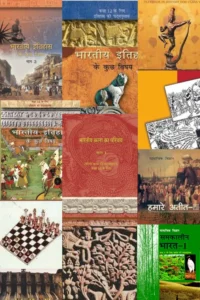
      NCERT Book Set-All Subjects (Class 6 to 12)

      Medium: English

      NCERT Book Set-All Subjects (Class 6 to 12)

      Medium: Hindi

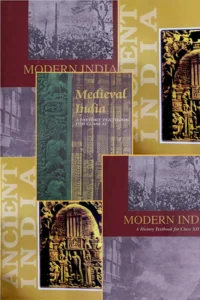
      Class 11-12th Old History NCERT Book (Set of 3)

      Medium: English

      FAQs

      Are NCERT books enough for the UPSC exam?

      While NCERT books are a great resource for building a strong foundation, they are not enough to clear the UPSC exam. Aspirants should also refer to other standard books, newspapers, and magazines to prepare for the exam.

      Does UPSC ask Questions directly from NCERT Books?

      In the past, it has been found that UPSC ask at least 2-3 from NCERT Books. UPSC wants a level playing field for everyone. Thus, UPSC do ask questions from NCERT.

      How can NCERT books help in clearing the UPSC exam?

      NCERT books can help in clearing the UPSC exam by providing a strong foundation for various subjects covered in the UPSC syllabus. These books cover a wide range of topics, including history, geography, economics, polity, and science, which are important for the exam.

      Are NCERT books relevant for the current UPSC syllabus?

      Yes, NCERT books are relevant to the current UPSC syllabus. The syllabus covers topics from NCERT books, making them an invaluable resource for the exam.

      How much time does it take to study NCERT for UPSC?

      It depends on person to person and their reading speed. Generally, it takes 2-3 days to read one NCERT books and it can be completed within 1-2 month very easily.

      How should aspirants use NCERT books for UPSC preparation?

      Aspirants should start by reading NCERT books for the subjects of thier choice and build a strong foundation. They should then move on to other standard books and references to further enhance their understanding.

      Should I make notes of NCERTs?

      Well, they are not required as such. Try to resist as much as you can. If you feel, just note down important definitions only.
    2. Detailed Analysis of UPSC Syllabus

      Detailed Analysis of UPSC Syllabus

      Introduction

      A detailed analysis of the UPSC syllabus is essential for UPSC aspirants to understand the exam’s scope and decide what to read and what not to read. Given the vast UPSC syllabus, it become important to cover all important topics given in syllabus.

      Even through UPSC has given a detailed syllabus for UPSC Mains Exam, but not for Prelims exam. This makes aspirant to study anything and everything under sun! Initially, aspirant reads everything but later it becomes hard to revise, and makes it difficult to remember in the final exam.

      Thus, having a detailed blueprint of UPSC Syllabus in head saves time and efforts. This helps specially when you’re reading a Newspaper for UPSC Exam. You can easily skip unnecessary stuff that come on daily basis.

      As you may know, the syllabus is divided into two parts: the Preliminary syllabus and the Mains syllabus. In this blog post we’ll decode UPSC Prelims & Mains Syllabus and analyse it in depth. I hope that this analysis will help aspirants prepare better for the exam and achieve their dream of becoming a civil servant.

      Pre-requisite for this article


      • Make sure you have read UPSC Official Syllabus before or are familiar with it.
      • If you’re haven’t, we highly encourage you to do read it and come back. You’ll get more benefits.
      • If you don’t want read this article, just bookmark this page!

      First of all, you have some questions in your head. Like, 

      • “Shall I mug up/remember the whole syllabus?” 
      • “I do not have the memory power to remember it, how should I go with that notion?”
      • “Every topper suggests remembering it, what if I don’t remember?”

      Well, we’ll do Anti-thesis.

      Is it important to remember the UPSC Syllabus? If so, why?

      It’s not mandatory to remember it, but if you know the syllabus by heart; you have some competitive advantages. How?

      1. While reading newspapers, you can easily eliminate unnecessary content. This will save time. You can revise Current Affair magazine in the meantime. You will feel less burdened. 
      2. You’ll know, your study material is more than enough to cover everything given in the syllabus. You will be less distracted from new study material that’s coming up everyday in the market. You’ll not become a “Material Collector”. Kudos to you! You can now utilise your energy efficiently.

      Now, the big question is “How to remember it?”

      Best way to Remeber UPSC Syllabus

      Well, you do not need to mug up actively now and then. Instead, Before you start studying anything in a day, you can read the syllabus once in 2-3 days or once a week initially. When you read a syllabus like this, it forms pictographic memory in your head. And after 4-5 months you easily remember important topics and themes given in the syllabus.

      I found that, if you read the syllabus and previous year’s questions(PYQs) together; you’ll notice some important themes from the syllabus. You can invest your efforts accordingly! 

      Now, let’s see prelims syllabus.

      Anaylsing Prelims Syllabus 

      We notice that there are high-weighted and low subjects. Subjects like Polity, Economy, Geography, Modern History and Environment have high weightage in the Prelims exam as compared to other remaining subjects. Other subjects like Art & Culture, Ancient & Medieval, IR, Sci & Tech etc. are relatively low weighted. 

      Well, I will tell you a few things;

      1. UPSC conducts Prelims Exam For both Indian Forest Services and Civil Services. Thus the importance of the Environment section can’t be ignored.
      2. You should decide when you’re going to study exclusively for Prelims (i.e. Feb-March 202X, before 3 months) and in this phase, you do not need to prepare for subjects like World History, Indian Society, Security, GS 4 (Ethics, Integrity and Aptitude) and  Optional etc. If you want, you can do 15 days or monthly quick revisions.
      3. UPSC is a premium body and it wants aspirants who are aware of all major changes happening at the National and International levels that affect human life. Thus national events like Beti Bachao, Digital India, UPI and international events, financial crisis, terrorism, and climate change have been asked previously in specific times because of their importance.
      4. Understand this and do a reverse question; “Can this topic be asked?” If so then where? Prelims, Mains or in an interview? If you do this exercise while studying, this will reduce your study material and you can give more time for revisions, ultimately better performance. 

      To be frank, there is nothing more than this post to analyse and understand about prelims syllabus.

      I hope, you got where to focus more while looking at prelims syllabus. You can get more insights from the Mains Syllabus.

      UPSC Mains Syllabus Analysis 

      In official terms, UPSC Main Examinations have two stages (Written and Interview), if you qualify for Mains Cutoff you’ll be called for your Personality Test. For Mains Paper, UPSC has given details topics to study. Before we go there, first understand UPSCs requirement.

      UPSC Requirements

      Let’s understand, What UPSC says w.r.t. Civil Services Mains Examination;

      “The main Examination is intended to assess the overall intellectual traits and depth of understanding of candidates rather than merely the range of their information and memory.”

      -UPSC Notification (2023)

      Essay Paper

      As per UPSC, candidates may be required to write essays on multiple topics. They are expected-

      1. To keep closely to the subject of the essay
      2. To arrange their ideas in orderly fashion, and 
      3. To write concisely
      4. Credit will be given for effective and exact expression.

      So, to good marks in essay, you need write concisely, effectively on given topic without going away from main topic.

      GS Papers

      The nature and standard of questions in the GS papers will be such that a well educated person will be able to answer them without any specialised study. 

      By this, UPSC meant 

      1. to test a candidate’s general awareness of a variety of subjects, which will have relevance for a career in Civil Services. 
      2. The questions are likely to test the candidate’s basic understanding of all relevant issues, and ability to analyse, and take a view on conflicting socio-economic goals, objectives and demands. The candidates must give relevant, meaningful and succinct answers.

      Compulsory Papers

      Its aim is to test the candidate’s ability to read and understand serious discursive prose, and to express his ideas clearly and correctly, in English and in the Indian language concerned.

      Optional Papers

      The scope of the syllabus for optional subject papers is broadly of the honours degree level (means a level higher than the bachelors’ degree and lower than the masters’ degree). And in the case of Engineering, Medical Science and law, the level corresponds to the bachelors’ degree.

      Now, you have understood the requirements of UPSC; But how to maximise out of it?

      Here are some tips and strategy to boost your score: 

      3 Strategies to to Crack UPSC Requirements

      1. Prioritise those subjects which you are good at!

      2. Prioritise those subjects you are bad at!

      3. Well, I have to do everything! then prioritise rationally. 

      In first strategy you capitalise those subjects 

      Sometimes in order to impress paper evaluators, we tend to write great theories from Scholars in our GS Paper. Don’t do that. Because I just don’t understand it. Can’t resonate.

      Well, I have to do everything; then prioritise rationally! Why do I say so? It’s highly probable that in order to cover everything; you collect a lot of stuff and you can’t comprehend them all. In the Main Examination hall, you need to have everything ready in your head in order to completely write a paper within a given time.

      1. Do not study for Essay initially. Once you have completed your GS (Optional, if possible) you have developed some knowledge base, analysing & reasoning ability. Once you have all GS knowledge/ raw material in your head; you can focus on writing an Essay in a continuous flow and organising that data into a concise & effective essay. You can score 120+ easily in an essay. If you are not good at English, don’t worry! You just need basic Grammar &  some Connecting Words. You can download it from our Website. Just Search “Connecting Words”
      2. Well you don’t need to study specifically for Compulsory Papers. You can just go through some PYQs and see if you can answer them easily. Here is a list of topics from the Compulsory English Paper that are repeatedly asked.
      3. Score good in Optional

      Well if you have gone through the syllabus and PYQs, you will notice that;

      1. There are very few questions asked in areas like Post Independence, World History. And there are areas like Indian Society, Governance, Security, Sci & tech, Disaster Management, whose syllabus is relatively less but the questions are asked every year. Sometimes, while emphasising more on important subjects like Polity, Economy, History; we neglect those rewarding subjects. Don’t do that!
      2. We generally study GS topics separately like
        • Physical Geography(GS1) & Disaster Management(GS3), 
        • But if you integrate them, you can save your time; Like you are studying
        • Study the geomorphological features of earthquakes in the Physical Geography section and then directly link it with its management part, NDMA guidelines on the same notes.
        • International relations are governed by national interests(Energy Security, Defence & Terrorism, Financial Stability, Sovereignty or Democratic values etc.)
        • If you understand that Oil or coal is essential for energy security then you can study oil related grouping (i.e. OPEC +)
        • Defence and Balance of Power(i.e.NATO, QUAD)
        • Financial or Trade Relations (BRICS, SEO, ASEAN, RPEC or WTO, IMF)
        • You can also link all these groupings with the Mapping Section of Geography.
        • You can just remember things by applying simple logic & reasoning.
      3. Now, you can integrate all GS Understanding into your Essays. How?
        • You can create anecdotes from Historical events like Anecdotes on Peace from 2 World Wars, Idea of Freedom from French Revolution or inspiration for Bloodless Struggle for Independence from Indian Freedom fighters.
        • You can integrate political Ideas of Democracy, Socialism, Secularism or concepts like Natural justice, Freedom of Speech, Right to Privacy or Life to draw significance of these values in human society.
        • You can mention statistical data from your Economy Section or from Welfare programmes to justify your arguments. 
      4. Above all, when you integrate your understanding, you need not to mug up everything. This is it; You’re studying smartly!
      5. Mapping Section(GS1) & International Relations (GS2)
      6. Natural Resources Distribution(GS1) & Energy and Infrastructure (GS3)
      7. Fundamental Rights, Governance(GS2) & Ethics(S4)

      For more such insights, you can join our UPSC Monk community. It’s free!

      1. Optional Syllabus
        1. Agriculture 
        2. Botany
      2. Prelims
        1. Imp. Themes 
        2. Previous Year Question Paper
      3. Essay Connecting Worlds
      4. Compulsory English Imp. Themes
      5. Subject Wise Strategies
        1. Art & Culture
    3. UPSC Booklist

      UPSC Booklist

      Books & References Section

      Headline: UPSC Recommended Books & Reading List

      • Subject-wise book recommendations
      • Must-read books for UPSC preparation
      • Reference materials for advanced study

      Subject-wise Reference Materials

      History

      • Ancient India:
        • R.S. Sharma’s “Ancient India”
        • Upinder Singh’s “A History of Ancient and Early Medieval India”
      • Medieval India:
        • Satish Chandra’s “History of Medieval India”
        • Old NCERT by Satish Chandra
      • Modern India:
        • Bipan Chandra’s “India’s Struggle for Independence”
        • Rajiv Ahir’s “Spectrum’s History of Modern India”

      Geography

      • Physical Geography:
        • Savindra Singh’s “Physical Geography”
        • Goh Cheng Leong’s “Certificate Physical and Human Geography”
      • Indian Geography:
        • Khullar’s “India: A Comprehensive Geography”
        • Oxford School Atlas
      • World Geography:
        • Majid Husain’s “World Geography”
        • NCERT “Fundamentals of Physical Geography”

      Polity

      • Constitutional Framework:
        • DD Basu’s “Introduction to the Constitution of India”
        • M. Laxmikant’s “Indian Polity”
      • Political Dynamics:
        • Subhash Kashyap’s “Our Constitution”
        • NCERT “Indian Constitution at Work”

      Economy

      • Economic Concepts:
        • Sanjeev Verma’s “Indian Economy”
        • Ramesh Singh’s “Indian Economy”
      • Economic Survey & Budget:
        • Ministry of Finance publications
        • NITI Aayog reports

      Environment & Ecology

      • Basic Concepts:
        • Shankar IAS’s “Environment”
        • NCERT Biology (Units related to environment)
      • Climate & Conservation:
        • Tata McGraw Hill’s “Environmental Studies”
        • Current reports and assessments

      Science & Technology

      • Basic Sciences:
        • NCERT Science textbooks
        • Spectrum’s “Science and Technology”
      • Current Developments:
        • Contemporary compilations
        • Government reports on S&T initiatives

      Ethics

      • Theoretical Foundations:
        • Lexicon’s “Ethics, Integrity & Aptitude”
        • G. Subba Rao’s “Ethics, Integrity & Aptitude”
      • Case Studies:
        • Compilation of administrative scenarios
        • ARC reports on governance ethics

      Resources for Beginners

      Essential Books

      • General Studies: NCERTs, Indian Polity by Laxmikant, India’s Struggle for Independence by Bipan Chandra
      • Economics: Indian Economy by Ramesh Singh, NCERT Macroeconomics
      • Geography: Certificate Physical and Human Geography by GC Leong, NCERT Geography
      • Environment: NCERT Biology, Environment by Shankar IAS

      Online Resources

      • News Analysis: Various UPSC-focused websites and YouTube channels
      • Practice Tests: Regular mock tests for Prelims and Mains
      • Previous Year Papers: Analyze and practice

      A Comprehensive Booklist

      If you are an UPSC aspirant, you must be aware of the importance of choosing the right books for your preparation. The UPSC syllabus is vast and covers a wide range of subjects. You need to read and revise multiple books for each subject to gain a comprehensive understanding of the topics and concepts. Thus, choosing the right set of books that cover the entire syllabus becomes important. 

      But how do you decide which books are the best for UPSC preparation? How do you avoid getting confused by the plethora of study material available in market, both online and offline? How do you balance the quality and quantity of your reading?

      In this blog, I will share with you some tips and tricks to help you select the a comprehensive booklist for UPSC Exam as recommended by previous UPSC toppers and best faculties in coaching.

      Download Booklist

      Prelims Booklist

      Mains Booklist

      Read a detailed blog on ‘Importance of NCERT for UPSC, How to Read them? Should you make notes out of it? List of Must Read NCERT Book’ ->

      Table of Contents

      Whats UPSC Booklist all about?

      UPSC Booklist is a set of books that helps us in covering entire topics given in the UPSC syllabus.

      Types of Booklist:

      1. Basic Booklist help you to develop a basic understanding of all subjects in UPSC exam. It’s introductory in nature for UPSC Aspirants. For example, NCERT Books.
      2. Prelims/Mains Specific Booklist deals with specific topics of Prelims or Mains Exam in great depth.
      3. Integrated Booklist is a set of different books that cover all the important aspects of both Prelims & Mains together.
      4. Comprehensive Booklist is Booklist that covers all the topics given in the UPSC Syllabus.

      Why Booklist is important?

      Having a booklist have multiple advantages;

      1. It set’s a direction in your preparation. Once you prepare your own booklist, you don’t need to search here and there during preparation phase.
      2. You protect yourself from Content Bombardment.

      Mental Model 💡

      Content Bombardment


      This term can be resonated with ‘Information Bombardment’, meaning person is bombarded with a lot of information and as a result he/she isn’t unable process information effectively.

      Given the lack of proper guidance, UPSC Aspirants buy more books on same topics initially. Also every coaching is in a race to provide the best material that includes everything under sky. As a result aspirants can’t revise those huge compliation of books multiple times and in the end, they just can’t perform well in the exam.

      What Toppers say’s on having a Booklist?

      There are some basic thumbrules when it comes to UPSC Booklist that every topper suggests in toppers talk-

      1. Keep Limited Resources

      “Keep limited resources and revise them again and again.”

      -Toppers

      We have seen Content Bombardment, which suggest us to keep resources limited in order to process information effectively. Given the vast UPSC syllabus, multiple books makes revision hard and ultimately deteriorate preparation

      Thus, every year, toppers stress upon keeping limited resources.

      2. Make your own Booklist

      When it comes grasping content from a book, every person has an unique abilities. Some aspirants can understand it in first reading and some get clear picture after 2-3 readings.

      Also, every book has its own vibe. Some writter use simple language to write a book and some uses uses complex words & language. What suits you, may not suits somebody else.

      Thus, making your own booklist is very important for every UPSC aspirant.

      How to make your own booklist?

      Initially, making a booklist may appear a time consuming task but it has it’s fruits in the end. Statistically, there are some key-points to consider while preparing a booklist;

      • It should cover maximum topics in single book.
      • It should have less unnecessary content.
      • It should high output per total pages in given book.

      Take for example Spectrum for Modern History or M. Laxmikanth For Polity. Both these books cover maximum upsc syllabus and has less irrelevant content from exam perspective. By studying and revising time to time, you definitely solve 70-80% questions asked in both UPSC Prelims and Mains exam. And effectively this makes them highly productive. Therefore every toppers recommended these books.

      I have created subject-wise list of UPSC Booklist recommended by Toppers. These books will build a base for your further reading as you go through the UPSC Exam process.

      You can use this booklist list as a reference and modify it as per your preference and convenience.

      1. UPSC Best Essay Book

      T

      2. History Books

      As per UPSC Syllabus, History can be divided into multiple parts and each section has a specific books.

      Art & Culture

      1. Class 11 NCERT on Art and Culture – notes should be made
      2. Class 12th NCERT on Art and Culture
      3. For art and culture, you should read the new NCERT books by Nitin Singhania and Ananda Coomaraswamy. These books cover the various aspects of Indian art and culture, such as architecture, sculpture, painting, music, dance, literature, religion, and philosophy. You should also refer to the CCRT website, which provides a rich and diverse source of information on Indian art and culture. You should also read the book by NIOS, which covers the topics in a simple and easy-to-understand manner.

      Ancient Indian History

      Ancient India by R.S.Sharma – recommended but not necessary to make notes

      Ancient and Mediaeval History: For ancient and mediaeval history, you should read the old NCERT books by R S Sharma and Satish Chandra. These books cover the major events, dynasties, cultures, and civilizations of ancient and mediaeval India. You should also read the new NCERT books by Romila Thapar and Harun-al-Rashid. These books provide a thematic and analytical approach to the history of ancient and mediaeval India. You should also refer to the Tamil Nadu board history textbook for class 11, which covers the topics in a simple and lucid manner.

      Medieval Indian History

      Medieval India by Satish Chandra – notes-making not required

      Modern History of India

      Modern India by Bipin Chandra – notes should be made. 

      For modern history, you should read the new NCERT book by Bipan Chandra. This book covers the history of India from the 18th century to the present day, with a focus on the freedom struggle and the nationalist movement. You should also read the book by Spectrum Publications, which provides a concise and comprehensive summary of the modern history of India. You should also read the book by Rajiv Ahir, which covers the post-independence history of India and the major events and developments that shaped the nation.

      India’s Struggle for Independence by Bipan Chandra

      This book is an authoritative account of the Indian freedom struggle. It provides a detailed analysis of the social, political, and economic factors that led to India’s independence. It covers the period from the revolt of 1857 to India’s freedom in 1947.

      India’s Struggle for Independence by Bipan Chandra is a must-read for understanding the freedom struggle and the socio-political dynamics that shaped modern India. The book covers the period from the revolt of 1857 to India’s independence in 1947, providing a comprehensive overview of the events, personalities, and ideologies involved.

      Post Independence India

      History of Modern India by Rajiv Ahir is a concise and well-structured book that covers the major events and developments in India from the mid-18th century to the present. It is a valuable resource for understanding the socio-political, economic, and cultural aspects of modern Indian history.

      World History

      World History by Arjun Dev – notes should be made

      3. Geography

      Physical Geography

      Human Geography

      World Geography

      Four NCERT books (New ones) – notes should be made. If you are referring to some other material also, make integrated notes by compiling everything in one place.

      World Geography- For world geography, you should read the NCERT books from class 6 to 12. These books cover the physical and human geography of the world, such as the landforms, climate, vegetation, population, resources, and regions. You should also read the book by G C Leong, which provides a clear and concise explanation of the physical geography of the world. You should also refer to a world atlas, such as the one by Orient Black Swan, which provides a visual and graphical representation of world geography.

      Indian Geography- For Indian geography, you should read the NCERT books from class 6 to 12. These books cover the physical and human geography of India, such as the physiography, climate, soil, agriculture, industry, transport, and regional development. You should also read the book by Majid Husain, which provides a detailed and comprehensive analysis of Indian geography. You should also refer to the Economic Survey and the India Year Book, which provide the latest and relevant information on Indian geography.

      Certificate Physical and Human Geography by G.C. Leong

      This book is a comprehensive guide to physical and human geography. It covers topics such as landforms, climate, population, agriculture, and urbanisation. The content is structured in a way that simplifies complex concepts and aids in conceptual clarity.

      4. Indian Society

      Geography of India by Majid Hussain is a comprehensive book that covers various aspects of India’s physical, human, and economic geography. It provides a detailed analysis of the country’s geographical features, climate, resources, and regional development, making it an indispensable resource for UPSC preparation.

      • Class 12 NCERTs – 2 books (New ones) – recommended but not necessary to make notes
      • XI Standard NCERT on Indian Society (Chapters on Unity & Diversity and Population Issues) 
      • XII Standard NCERT (Chapters on Communalism, Secularism and Urban Issues such as Poverty, Housing, etc.)

      5. Indian Polity & Constitution

      • Class 11 NCERT (New one) – notes-making not required.
      • Indian Polity- For Indian polity, you should read the NCERT books from class 9 to 12. These books cover the basic concepts and principles of the Indian polity, such as the constitution, the political system, the governance, and the rights and duties of the citizens. You should also read the book by M Laxmikanth, which is the bible for Indian polity. This book covers the entire syllabus of Indian polity in a systematic and lucid manner. You should also refer to the Indian Constitution and the 2nd ARC reports, which provide the original and authentic source of information on the Indian polity.

      Indian Polity by M. Laxmikanth

      This book is considered the bible for Indian polity preparation. It covers various aspects of the Indian political system, including the Constitution, the three branches of government, and the functioning of various institutions. It is a comprehensive guide that is suitable for both beginners and advanced learners.

      Indian Polity by M. Laxmikanth is considered the Bible for UPSC aspirants. It covers all aspects of the Indian political system, including the Constitution, governance, and various institutions. The book is well-structured and provides in-depth knowledge on the subject.

      6. Governance

      For a detailed understanding of governance in India, this book is highly recommended. It explores topics such as bureaucracy, decentralization, and the role of various stakeholders in governance. It also provides insights into the challenges and reforms required for effective governance.

      7.Social Justice

      8. International Relations

      9. Economic Development and Agriculture

      • Class 11 NCERT (New one) – notes-making not required
      • Indian Economy- For Indian economy, you should read the NCERT books from class 9 to 12. These books cover the basic concepts and theories of the Indian economy, such as the national income, the money and banking, the fiscal policy, the foreign trade, and the economic development. You should also read the book by Nitin Singhania, which provides a simple and easy-to-understand explanation of the Indian economy. You should also read the book by Ramesh Singh, which provides a detailed and comprehensive analysis of the Indian economy. You should also refer to the Economic Survey and the Budget, which provide the latest and relevant information on the Indian economy.

      Indian Economy by Ramesh Singh is a comprehensive book that covers all aspects of the Indian economy, including its structure, policies, and challenges. The book provides a clear understanding of economic concepts and their application in the Indian context, making it an essential resource for UPSC aspirants.

      10. Science and Technology

      • Not very necessary to read these NCERTs. Rather read some compiled material such as Sriram IAS’s Science & Tech notes or VisionIAS PT 365 Science & Tech module.

      For science and technology, you should read the NCERT books from class 6 to 12. These books cover the basic concepts and applications of science and technology, such as the physics, chemistry, biology, biotechnology, nanotechnology, and space technology. You should also read the book by Ashok Kumar Singh, which provides a comprehensive and updated coverage of the science and technology syllabus. You should also refer to the The Hindu newspaper, which provides the latest and relevant information on the science and technology.

      11. Environment and Ecology

      Environment for Civil Services Prelims and Mains by D.R. Khullar

      Biology: 12th – last unit only.

      To understand the environmental aspects of the UPSC syllabus, Environment for Civil Services Prelims and Mains by D.R. Khullar is highly recommended. It covers various topics, including environmental conservation, biodiversity, climate change, and sustainability.

      For the environment, you should read the NCERT books from class 6 to 12. These books cover the basic concepts and issues of the environment, such as the ecology, biodiversity, pollution, climate change, and environmental conservation. You should also read the book by Shankar IAS Academy, which provides a complete and updated coverage of the environment syllabus. You should also refer to the NIOS book, which covers the topics in a simple and easy-to-understand manner. You should also read the Down to Earth magazine, which provides the latest and relevant information on the environment.

      12. Internal Security

      13. Disaster Management

      14. Ethics, Integrity and Aptitude

      For ethics, you should read the NCERT books from class 6 to 12. These books cover the basic concepts and values of ethics, such as the moral reasoning, the ethical dilemmas, the emotional intelligence, the human values, and the public service values. You should also read the book by Subba Rao, which provides a complete and updated coverage of the ethics syllabus. You should also refer to the 2nd ARC reports, which provide the original and authentic source of information on the ethics.

      GS 4- How important is it to read the ARC report for the UPSC examination?

      6. General Studies Paper I by MHE

      General Studies Paper I by McGraw-Hill Education (MHE) is a comprehensive book that covers a wide range of topics, including history, geography, polity, economy, art and culture, and current affairs. It is a valuable resource for building a strong foundation in the general studies subjects.

      7. General Studies Paper II by MHE

      General Studies Paper II by MHE is a comprehensive book that covers topics related to governance, constitution, polity, international relations, and current affairs. It provides a holistic understanding of the subjects and is essential for scoring well in the UPSC mains examination.

      8. Current Affairs

      India Year Book

      The India Year Book is an annual publication by the Publications Division of the Government of India. It provides comprehensive information on various aspects of the country, including government schemes, policies, and initiatives. It is a valuable resource for staying updated with current affairs and gaining insights into government programs.

      Optional Booklist

      Can we prepare without booklist?

      Conclusion

      Choosing the right set of books is crucial for effective UPSC preparation. The booklist mentioned in this blog post covers the major subjects and provides comprehensive knowledge on the required topics. Remember, while books are important, it is equally essential to supplement your preparation with newspapers, magazines, and online resources to stay updated with current affairs. Best of luck with your UPSC journey!

      Book’s to Buy

      Books Written by UPSC Toppers

      Read more

      Prelims Specific Booklist

      Mains Specific Booklist

      NCERT Booklist

      External Link

      Optional Subject Booklist

      M. Laxmikant


      Ramesh Singh


      NCERTs


      Past 20 Years of Question Paper


      Atlas


      A-4 Size Spiral Bunddle for Answer Writing


    4. UPSC Syllabus

      UPSC Syllabus

      UPSC Civil Services Exam Syllabus

      Understanding UPSC Syllabus is the most important part of UPSC Civil Services Exam preparation. UPSC publishes syllabi for CSE in it’s bulky notification every year.

      “UPSC Syllabus is the holly bible for aspirants.”

      – Every UPSC Topper

      In this article, we have simplified latest UPSC Syllabus for Prelims, Mains and Interview. We’ve also provided a separate links to each Optional Subject Syllabus, PYQs, Booklist etc.

      What’s UPSC Syllabus?

      UPSC in it’s official notification gives a detailed list of topics that UPSC Aspirants needs to study from the exam perpective. This Syllabus comprises of Prelims Syllabus(GS and CSAT), Mains Syllabus (Essay, General Studies 1-4, Optional Paper) and Interview Requirements.

      UPSC Prelims Syllabus (Paper I & II)

      Paper 1-General Studies (GS) Syllabus

      1. Current events of national and international importance.
      2. History of India and Indian National Movement.
      3. Indian and World Geography-Physical, Social, Economic Geography of India and the World.
      4. Indian Polity and Governance-Constitution, Political System, Panchayati Raj, Public Policy, Rights, Issues, etc.
      5. Economic and Social Development-Sustainable Development, Poverty, Inclusion, Demographics, Social Sector Initiatives, etc.
      6. General issues on Environmental ecology, Biodiversity and Climate Change-that do not require subject specialisation.
      7. General Science.

      Paper 2-Civil Services Aptitude Test (CSAT) Syllabus

      1. Comprehension;
      2. Interpersonal skills including communication skills;
      3. Logical reasoning and analytical ability;
      4. Decision making and problem solving;
      5. General mental ability;
      6. Basic numeracy (numbers and their relations, orders of magnitude, etc.)(Class X level) 
      7. Data interpretation (charts, graphs, tables, data sufficiency etc. — Class X level)
      People also asks

      How many paper are there in UPSC Prelims?

      Two. Paper 1 on General Studies and Paper 2 based on CSAT.

      How many subjects are there in UPSC Prelims?

      Two subjects, General Studies and CSAT but General Studies is further divided into multiple subjects like Art and Culture, Ancient and Medieval History, Modern History, Geography, Polity and Constitution, Economic Development, Science and Technology, Environment etc.

      Which subjects are excluded from UPSC Prelims?

      Subjects like Indian Society, Post Independence, World History, Governance, Disaster Management, Security and Ethics are excluded from UPSC Prelims.

      UPSC Mains Syllabus (All Papers)

      UPSC Say’s,
      The main Examination is intended to assess the overall intellectual traits and depth of understanding of candidates rather than merely the range of their information and memory.

      1. The nature and standard of questions in the General Studies papers (Paper II to Paper V) will be such that a well educated person will be able to answer them without any specialised study. 
      2. The questions will be such as to test a candidate’s general awareness of a variety of subjects, which will have relevance for a career in Civil Services. 
      3. The questions are likely to test the candidate’s 
        1. Basic understanding of all relevant issues.
        2. Ability to analyse. 
        3. Take a view on conflicting socio-economic goals, objectives and demands. 
      4. The candidates must give relevant, meaningful and succinct answers.

      Paper‐1: Essay


      Candidates may be required to write essays on multiple topics. They will be expected;

      • To keep closely to the subject of the essay.
      • To arrange their ideas in orderly fashion, and to write concisely.
      • Credit will be given for effective and exact expression. 

      Paper-2: General Studies‐1 (GS1)


      Indian Heritage and Culture, History and Geography of the World and Society.


      Art and Culture from Ancient to Modern Times

      • Indian culture will cover the salient aspects of Art Forms, literature and Architecture from ancient to modern times. 

      Modern History

      • Modern Indian history from about the middle of the eighteenth century until the present- significant events, personalities, issues. 
      • The Freedom Struggle — its various stages and important contributors/contributions from different parts of the country. 

      Post Independence

      • Post-independence consolidation and reorganisation within the country. 

      World History

      • History of the world will include events from the 18th century such as industrial revolution, world wars, redrawal of national boundaries, colonisation, decolonization, political philosophies like communism, capitalism, socialism etc.— their forms and effect on the society. 

      Indian Society

      • Salient features of Indian Society, Diversity of India. 
      • Role of women and women’s organisation, population and associated issues, poverty and developmental issues, urbanisation, their problems and their remedies. 
      • Effects of globalisation on Indian society. 
      • Social empowerment, communalism, regionalism & secularism. 

      Geography

      • Salient features of the world’s physical geography. 
      • Distribution of key natural resources across the world (including South Asia and the Indian sub-continent);
      • factors responsible for the location of primary, secondary, and tertiary sector industries in various parts of the world (including India). 
      • Important Geophysical phenomena such as earthquakes, Tsunami, Volcanic activity, cyclones etc., geographical features and their location-changes in critical geographical features (including water-bodies and ice-caps) and in flora and fauna and the effects of such changes.

      Paper-3: General Studies‐2 (GS2)


      Governance, Constitution, Polity, Social Justice and International relations.


      Indian Constitution & Polity

      • Indian Constitution—historical underpinnings, evolution, features, amendments, significant provisions and basic structure. 
      • Functions and responsibilities of the Union and the States, issues and challenges pertaining to the federal structure, devolution of powers and finances up to local levels and challenges therein. 
      • Separation of powers between various organs dispute redressal mechanisms and institutions. 
      • Comparison of the Indian constitutional scheme with that of other countries. 
      • Parliament and State legislatures—structure, functioning, conduct of business, powers & privileges and issues arising out of these. 
      • Structure, organisation and functioning of the Executive and the Judiciary—Ministries and Departments of the Government; pressure groups and formal/informal associations and their role in the Polity.
      • Salient features of the Representation of People’s Act. 
      • Appointment to various Constitutional posts, powers, functions and responsibilities of various Constitutional Bodies. 
      • Statutory, regulatory and various quasi-judicial bodies. 

      Social Justice

      • Issues relating to development and management of Social Sector/Services relating to Health, Education, Human Resources. 
      • Issues relating to poverty and hunger. 

      Government Schems

      • Welfare schemes for vulnerable sections of the population by the Centre and States and the performance of these schemes; mechanisms, laws, institutions and Bodies constituted for the protection and betterment of these vulnerable sections. 

      Governance

      • Government policies and interventions for development in various sectors and issues arising out of their design and implementation. 
      • Development processes and the development industry- the role of NGOs, SHGs, various groups and associations, donors, charities, institutional and other stakeholders. 
      • Important aspects of governance, transparency and accountability, e-governance- applications, models, successes, limitations, and potential; citizens charters, transparency & accountability and institutional and other measures. 
      • Role of civil services in a democracy. 

      International Relations

      • India and its neighbourhood-relations. 
      • Bilateral, regional and global groupings and agreements involving India and/or affecting India’s interests.
      • Effect of policies and politics of developed and developing countries on India’s interests, Indian diaspora. 
      • Important International institutions, agencies and fora- their structure, mandate. 

      Paper‐4: General Studies‐3 (GS3)


      Technology, Economic Development, Biodiversity, Environment, Security and Disaster Management


      Econmic Development

      • Indian Economy and issues relating to planning, mobilisation, of resources, growth, development and employment. 
      • Inclusive growth and issues arising from it. 
      • Government Budgeting. 
      • Land reforms in India. 
      • Effects of liberalisation on the economy, changes in industrial policy and their effects on industrial growth. 
      • Infrastructure: Energy, Ports, Roads, Airports, Railways etc. 
      • Investment models. 

      Agriculture

      • Major crops-cropping patterns in various parts of the country, – different types of irrigation and irrigation systems storage, transport and marketing of agricultural produce and issues and related constraints;
      • e-technology in the aid of farmers. 
      • Issues related to direct and indirect farm subsidies and minimum support prices; Public Distribution System- objectives, functioning, limitations, revamping;
      • Issues of buffer stocks and food security; Technology missions; economics of animal-rearing. 
      • Food processing and related industries in India- scope and significance, location, upstream and downstream requirements, supply chain management. 

      Science and Technology

      • Science and Technology- developments and their applications and effects in everyday life. 
      • Achievements of Indians in science & technology; indigenization of technology and developing new technology. 
      • Awareness in the fields of IT, Space, Computers, robotics, nano-technology, bio-technology and issues relating to intellectual property rights. 

      Environment

      • Conservation, environmental pollution and degradation, environmental impact assessment. 

      Disaster Management

      • Disaster and disaster management. 

      Security

      • Linkages between development and spread of extremism. 
      • Role of external state and non-state actors in creating challenges to internal security. 
      • Challenges to internal security through communication networks, role of media and social networking sites in internal security challenges, basics of cyber security;
      • Money-laundering and its prevention. 
      • Security challenges and their management in border areas – linkages of organised crime with terrorism. 
      • Various Security forces and agencies and their mandate. 

      Paper‐5: General Studies‐4 (GS4)


      Ethics, Integrity and Aptitude


      General Information

      This paper will include questions to test the candidates’ attitude and approach to issues relating to integrity, probity in public life and his problem solving approach to various issues and conflicts faced by him in dealing with society. Questions may utilise the case study approach to determine these aspects. The following broad areas will be covered: 

      • Ethics and Human Interface: Essence, determinants and consequences of Ethics in-human actions; dimensions of ethics; ethics – in private and public relationships.
      • Human Values – lessons from the lives and teachings of great leaders, reformers and administrators; role of family society and educational institutions in inculcating values. 
      • Attitude: content, structure, function; its influence and relation with thought and behaviour; moral and political attitudes; social influence and persuasion. 
      • Aptitude and foundational values for Civil Service, integrity, impartiality and non-partisanship, objectivity, dedication to public service, empathy, tolerance and compassion towards the weaker-sections. 
      • Emotional intelligence-concepts, and their utilities and application in administration and governance. 
      • Contributions of moral thinkers and philosophers from India and the world. 
      • Public/Civil service values and Ethics in Public administration: Status and problems; ethical concerns and dilemmas in government and private institutions; laws, rules, regulations and conscience as sources of ethical guidance; accountability and ethical governance; strengthening of ethical and moral values in governance; ethical issues in international relations and funding; corporate governance. 
      • Probity in Governance: Concept of public service; Philosophical basis of governance and probity; Information sharing and transparency in government, Right to Information, Codes of Ethics, Codes of Conduct, Citizen’s Charters, Work culture, Quality of service delivery, Utilisation of public funds, challenges of corruption. 
      • Case Studies on above issues. 
      People also asks

      How many total marks are in the UPSC Exam?

      The UPSC Mains Exam account for 1750 total marks. In this, marks of two compulsory paper on languages are NOT included as these papers are qualifying in nature.

      What are compulsory subjects in UPSC mains?

      Two. Compulsory paper on English and on regional language.

      What are the 9 papers in UPSC?

      There are 9 papers in the UPSC: 1 Essay paper, 4 general studies papers, 2 Compulsory paper on language and 2 optional papers.

      How many subjects are there in UPSC Mains?

      UPSC Mains have 4 general studies paper and 2 optional paper, which are further divided into different subjects. Like General studies paper 1 is divided into Art and Culture from Ancient to Modern times, Modern History, World History, Post Independence, Indian Society, Geography. Similarly General Studies paper 2 is divided among Polity and Constitution, Governance, Social Justice, International Relations and General Studies paper 3 is divided into Economic Development, Agriculture, Science and technology, Environment, Security etc. General Studies Paper 4 is completely dedicated to Ethics, Integrity and aptitude.

      Qualifying Language Papers


      The aim of the paper is to test the candidates’ ability to read and understand serious discursive prose, and to express ideas clearly and correctly, in English and Indian language. 

      Paper A: English Languages


      The pattern of questions would be broadly as follows : 

      • Comprehension of given passages. 
      • Precise Writing. 
      • Usage and Vocabulary. 
      • Short Essays. 

      Paper B: Indian Languages


      • Comprehension of given passages. 
      • Precis Writing. Usage and Vocabulary.
      • Short Essays. 
      • Translation from English to the Indian Language and vice-versa. 

      Please Note


      • Two papers on Indian Languages and English are qualifying in nature and of matriculation/class 10th level or equivalent standard.
      • The marks obtained in these papers will not be counted for ranking. 
      • The candidates will have to answer the English and Indian Languages papers in English and the respective Indian language (except where translation is involved). 

      UPSC Optional Syllabus


      Paper‐6 & 7: Optional Subject Papers 1 & 2

      UPSC Say’s,

      “The scope of the syllabus for optional subject papers (Paper VI and Paper VII) for the examination is broadly of the honours degree level i.e. a level higher than the bachelors’ degree and lower than the masters’ degree. In the case of Engineering, Medical Science and law, the level corresponds to the bachelors’ degree.”

      List of Optional Subjects for Main Examination:  

      1. Agriculture 
      2. Animal Husbandry and Veterinary Science 
      3. Anthropology 
      4. Botany 
      5. Chemistry 
      6. Civil Engineering  
      7. Commerce and Accountancy  
      8. Economics 
      9. Electrical Engineering 
      10. Geography 
      11. Geology 
      12. History 
      13. Law 
      14. Management 
      15. Mathematics 
      16. Mechanical Engineering  
      17. Medical Science  
      18. Philosophy 
      19. Physics 
      20. Political Science and International Relations 
      21. Psychology 
      22. Public Administration  
      23. Sociology 
      24. Statistics 
      25. Zoology

      Literature of any one of the following languages: 

      NOTE: Literature of the following languages:

      • In regard to the languages included in the Eighth Schedule to Constitution, the scripts will be the same, as given in Exam Notification.
      • A candidate may be required to answer some or all the Questions in the language concerned. Candidates can also use different language mediums for answering papers on General Studies and Optional Subjects.
      1. Assamese
      2. Bengali
      3. Bodo 
      4. Dogri 
      5. English
      6. Gujarati 
      7. Hindi
      8. Kannada
      9. Kashmiri
      10. Konkani
      11. Maithili
      12. Malayalam
      13. Manipuri
      14. Marathi
      15. Nepali
      16. Odia
      17. Punjabi
      18. Sanskrit
      19. Santhali
      20. Sindhi
      21. Tamil
      22. Telugu
      23. Urdu 

      UPSC Interview Syllabus

      What does UPSC Says, 

      “The candidate will be interviewed by a Board who will have before them a record of the candidate’s career. The candidate will be asked questions on matters of general interest.

      – UPSC Notification

      UPSC also gives a detailed requirements-

      • The object of the Interview/Personality Test is to assess the personal suitability of the candidate for a career in public service by a Board of competent and unbiased observers.
      • The Interview/Personality Test is intended to judge the mental calibre of a candidate. In broad terms, this is really an assessment of not only intellectual qualities but also social traits and interest in current affairs. Some of the qualities to be judged are mental alertness, critical powers of assimilation, clear and logical exposition, balance of judgement, variety and depth of interest, ability for social cohesion and leadership, intellectual and moral integrity
      • The technique of the Interview/Personality Test is not that of a strict cross-examination but of a natural, though directed and purposive conversation which is intended to reveal the mental qualities of the candidate.
      • The Interview/Personality Test is not intended to be a test either of the specialized or general knowledge of the candidates which has been already tested through their written papers.
      • Candidates are expected to have taken an intelligent interest not only in their special subjects of academic study but also in the events which are happening around them both within and outside their own State or Country as well as in modern currents of thought and in new discoveries which should rouse the curiosity of well-educated youth.”

      FAQs

      From where I can download UPSC Syllabus?

      You can download UPSC Syllabus from https://upscmonk.in/upsc-syllabus/ or https://upsconline.nic.in

      What is the General Studies (GS) syllabus?

      The GS syllabus is divided into four papers:

      1. GS Paper I: Indian History and Indian Culture
      2. GS Paper II: Indian Constitution, Polity, International Relations, Social Justice and Governance
      3. GS Paper III: Economic Development, Science and Technology, Environment, Security and Disaster Management
      4. GS Paper IV: Ethics, Integrity and Aptitude

      Read more

      Book’s to Buy


      Related Resources

      • Links to subject-wise study material
      • Links to previous year question papers
      • Links to topic-wise current affairs
    5. How to Start Preparing for UPSC CSE? A Beginner’s Guide

      Starting UPSC preparation as a beginner can be both exciting and overwhelming. To start right and maximize your chances of success, having a clear plan, using the right resources, and maintaining disciplined execution are essential. Here’s a comprehensive beginner’s strategy to help you embark on your UPSC journey effectively:

      1. Understand the Exam and Syllabus

      • Begin by thoroughly reading the UPSC notification and syllabus to understand the exam structure, types of papers (Prelims, Mains, Interview), marking scheme, and cutoff system.
      • Keep a printed copy of the syllabus visible at your study space and systematically tick off topics as you cover them. Stick strictly to the syllabus to avoid wasting time on irrelevant subjects.

      2. Build a Strong Foundation with NCERTs

      • Start your preparation with NCERT textbooks from class 6 to 12 for subjects like History, Geography, Polity, Economics, and Science.
      • Focus on clear conceptual understanding before moving on to advanced reference books.
      • Take one subject at a time, highlight important points, and create concise notes for frequent revisions.

      3. Choose Your Optional Subject Wisely

      • Research and select your optional subject based on your background, interest, availability of resources, and previous experience.
      • Avoid changing your optional subject frequently once chosen—as consistency is key to mastering it.

      4. Develop a Balanced Study Plan

      • Divide your study time between Prelims and Mains preparation, balancing static subjects and current affairs.
      • Set realistic daily, weekly, and monthly goals to cover the syllabus in a disciplined manner.
      • Include regular time slots for revision and mock tests to improve retention and exam temperament.

      5. Stay Updated with Current Affairs

      • Read a quality daily newspaper like The Hindu or The Indian Express from day one, focusing on analysis relevant to the UPSC syllabus.
      • Complement newspaper reading with monthly current affairs magazines or reliable online portals.
      • Integrate current affairs with static subjects in your notes for the Mains exam.

      6. Practice Answer Writing and Mock Tests Early

      • Begin practicing answer writing after completing some foundational reading.
      • Analyze previous years’ question papers and write answers within word limits to gain confidence and improve presentation.
      • Regularly take mock tests for both Prelims and Mains to identify your strengths and weaknesses, and to develop time management skills.

      7. Multiple Revisions Are Crucial

      • UPSC preparation is about what you remember and can reproduce under pressure, not just what you read.
      • Revise every topic multiple times using your notes, flowcharts, and mind maps.
      • Revise current affairs weekly and monthly, and avoid last-minute hurried revisions.

      8. Maintain Discipline and Well-being

      • Create a daily routine that includes study hours, breaks, exercise, and leisure to keep your mind fresh.
      • Stay positive, motivated, and surround yourself with supportive peers and mentors.
      • Take care of your physical and mental health to sustain long-term preparation.

      Recommended Resources for Beginners

      • NCERT textbooks (Class 6-12) for History, Geography, Polity, Economics, Science
      • Standard reference books like M. Laxmikanth for Indian Polity, Bipin Chandra for Modern History, Ramesh Singh for Economy
      • Newspaper: The Hindu or The Indian Express
      • Current affairs magazines and reliable online platforms
      • Join test series and consider coaching or online mentorship if needed for structured guidance

      By building a strong foundation, adhering to a disciplined and realistic plan, and practicing consistently, beginners can confidently navigate the challenging UPSC journey and improve their chances of success. Remember, success in UPSC is a marathon, not a sprint—patience and persistence matter most.


      Starting Your Preparation Journey

      Step 1: Understand the UPSC Pattern and Syllabus

      • Download the official UPSC notification and syllabus
      • Analyze previous years’ question papers
      • Identify overlapping areas across various papers

      Step 2: Build Your Foundation

      • Current Affairs: Start following a good newspaper daily (The Hindu, Indian Express)
      • NCERT Books: Read thoroughly from Class 6-12 for all subjects
      • Basic Reference Books: Begin with standard texts recommended by toppers

      Step 3: Create a Study Plan

      • Set realistic goals: Daily, weekly, and monthly targets
      • Allocate time efficiently: Balance between subjects
      • Regular revision: Incorporate systematic revision cycles

      Step 4: Develop Answer Writing Skills Early

      • Practice writing answers within word limits
      • Focus on structure, presentation, and conclusions
      • Get feedback from mentors or peers

      If you have watched tones of videos on Youtube or searched “How to prepare for UPSC?” on google and still don’t know the start preparing for this exam, you’re on the right page.

      Let me remind you that we live in information age, where information is not a barrier. This however creates an ‘information overload’ for many UPSC Aspirants. And as a consequences we don’t know the exact strategy to start our preparation.

      First understand UPSC CSE and then

      To simplify things, we have divided this blogpost into different secfions: basic understanding, general strategy,

      Basic Understanding

      Before you enter to play any game, you need have a basic understanding about that game, its rules, different stages involved in it. Ideally, one should start from doing some research about UPSC Civil Services Examination. Like, exam pattern, qualifying stages, optional subject lists etc.

      If you’re completely unaware about UPSC CSE, please read it once to have a basic picture in your mind. If you basic understanding, go head with prepararion strategy.

      Fun Fact! 🙃

      Many people use “UPSC” or “IAS” to denote Civil Service Exam (aka CSE). And all 3 stages in CSE have official terminology!
      For example; Prelims is called Civil Services Preliminary Exam or CSP Exam in short. In similar way, Mains and Personality Test are called as CSM and CSPT in short!

      Steps to follow:

      1. Read and Understand UPSC Exam first.
      2. UPSC Syllabus
      3. Prepare your own Booklist
      4. Start reading newspaper as you go forward.
      5. Make a general Time-Table.

      Preparation Strategy

      Before we start, there are few things, that you need to have with you throughout UPSC CSE preparation and I strongly want you to have it with you. Here is a list:

      1. UPSC Syllabus
      2. UPSC Booklist, prepared by you. You can take reference from our booklist for that matter!
      3. Previous Year Question Papers (PYQs).

      If you don’t have one; please download them from download section.

      Though you’ll not understand many things, but you should go through UPSC Official Syllabus and last year papers of prelims and mains once.

      I hope that you have a above mentioned things with you. Let’s start!

      Decision Making

      You need take a certain decisions.

      1. Do you want to join coaching or not? If yes, which one? If not, why not? Can you do self study?
      2. Do you want to make notes or underlying on the book is okay for you?
      3. When to start Answer Writing?
      4. Which newspapers to read? Or is current affairs magazine sufficient?
      5. Which optional subject to choose? How to choose it?
      6. Shouod I join Mock Test series?

      After understanding UPSC exam, you should understand yourself. All questions end up with what kind of aspirant you’re? What’s most suitable for you and what can possibly work for you?

      You might heard of terms like “Collector”, “DM” having huge respect in society or at least seen the dam cool entry of IAS, IPS officer. Or many parent’s want their child to see in the civil services. Being gazetted class-1 posts in India, these services offer great perks, career opportunities and platform for many to being change in society. As a result, competition has increased tremendously. ||| To get success in very first attempt requires a lot of hardwork, percievarance… thus, knowing about this ||| But with this power and prestige comes great responsibility. ||| Don’t worry; we’re here to guide you on how to start your UPSC exam preparation. ||| Let’s break it down into simple steps.

      3. Collect Study Materials:Gather your study materials. You’ll need textbooks, reference books, past question papers, and online resources.

      4. Create a Study Plan:Make a plan. Organize your subjects, allocate time for each, and create a daily, weekly, and monthly schedule.

      5. Start with Basics:Begin with NCERT books for subjects like history, geography, polity, and economics. They provide a strong foundation.

      6. Read Newspapers:Stay updated with current events by reading newspapers like The Hindu or The Indian Express.

      7. Choose Optional Subjects:For the Main Examination, choose your optional subjects wisely. Pick what you’re good at and passionate about.

      8. Practice Past Papers:Solve previous year question papers to understand the pattern of the exam and types of questions asked.

      9. Take Mock Tests:Participate in mock tests to assess your preparation and learn time management.

      17. Practice Answer Writing:Learn how to write clear and structured answers for the Main Examination.

      10. Regular Revision:Keep revising what you’ve learned. Regular revision helps you remember the information.

      11. Join a Coaching Institute (Optional):Consider coaching for guidance. Look for reputed coaching centers to help you in your UPSC journey.

      There are some intangible things in UPSC that one should understand first.

      1. Stay Healthy:Eat well, exercise, and get enough rest. A healthy body and mind will support your preparation.
      2. Burnout & Productivity–> Stay Motivated:UPSC preparation takes time. Stay motivated by setting small goals and finding inspiration from successful candidates.14. Improve Writing Skills:Develop good writing and communication skills. These are essential for the Main Examination.
      3. Reassurance –> Maintain a Positive Attitude:Be positive and committed. It might take multiple attempts to succeed, so don’t lose heart.16. Keep Up with Current Affairs:Stay informed about current events, both national and international.
      4. Instant gratification vs long term happiness-UPSC preparation is a journey that requires patience and persistence. Success might not happen overnight, but with hard work and dedication, you can achieve your dream of serving your country as a civil servant. So, start your preparation today and remember that every small step takes you closer to your goal. Best of luck on your UPSC journey!
      5. One needs to be mentally (psychologically)strong… Ups and downs.

      Subjectwise Strategy

      “Well beginning is half done!”

      -Experience

      Once you’re familiar with CSE, you need to go through the official syllabus.

      Download

      Download Syallbus

      Read Previous Year Questions and try to understand them, see if you can analyse them. Its always suggested that you do this actuvity by your own and

      You can take reference from PYQ formats, Patterns

      Here, we are going to do some reverse planning.

      Civil Services Mains (CSM, as officially called!) is a written exam. It lasts for 5 days, and Scheduled on 2 weekends.

      Click to see or download official syllabus. To read more detailed syllabus click below.

      Booklist

      “Keep limited resources and revise them again.”

      -Every Toppers

      Previous Year Question (PYQs)

      Newspaper/Current Affairs

      Link- Read detailed syllabus analysis by Monk.

      Something that are integral part of our preparation are; mains syllabus and our Booklist.

      1. Download Mains Syllabus
      2. Download Mains Booklist

      Subject-specific Strategy

      For better understanding; we have made subject specific strategies:

      General Studies 1

      Subjects included Art & Culture, Ancient and Medieval, Modern History, World History, Post-Independence, Indian Society, Geography etc.

      General Studies 1

      Subjects included Art & Culture, Ancient and Medieval, Modern History, World History, Post-Independence, Indian Society, Geography etc.

      General Studies 2

      Subjects included Art & Culture, Ancient and Medieval, Modern History, World History, Post-Independence, Indian Society, Geography etc.

      General Studies 3

      Subjects included Art & Culture, Ancient and Medieval, Modern History, World History, Post-Independence, Indian Society, Geography etc.

      General Studies 3

      Subjects included Art & Culture, Ancient and Medieval, Modern History, World History, Post-Independence, Indian Society, Geography etc.

      General Studies 4

      Subjects included Art & Culture, Ancient and Medieval, Modern History, World History, Post-Independence, Indian Society, Geography etc.

      To help you better, we have curated different sections as follows:

      1. Please go through official syllabus and its detsiled breakup by Monk. You will get an idea about the UPSC expectations
      2. Answer Writing

      Note Making

      How to write an Answer?

      Excepert

      When should I start Answer Writing?

      Excerpt

      Book’s to Buy

      Essential Books

      IMAGE

      10 Yearwise Solved Papers

      A

      By Disha Publication

      Suggestion: Must Have

      IMAGE

      The Answer Writing Manual

      For

      By

      Books written by Toppers

      IMAGE

      Fundamentals of Essay and Answer Writing

      A step-by-step Guide to help you ace the UPSC Mains Exam

      By Anudeep Durishetty

      Suggestion: Must Have

      IMAGE

      The Answer Writing Manual

      For UPSC Civil Services & State PSC Examinations

      By Shrusthi Deshmukh

      IMAGE

      What I Wish I Had Known Before Starting UPSC Preparation

      A step-by-step Guide to help you ace the UPSC Mains Exam

      By Suyash Chavan

      Suggestion:

      IMAGE

      HOW I TOPPED THE UPSC AND HOW YOU CAN TOO :

      What It Really Takes to Crack the World’s Toughest Exam

      By Gamini Singla

      Suggestion:

      Read more

      Unrelated article from Monk?

      Excepert

      Unrelated article from Monk?

      Excerpt

    6. UPSC Civil Services Exam Details

      UPSC Civil Services Exam Details

      Many aspirants get confused with Civil Services Examination (CSE) and Union Public Service Commission (UPSC). Many assume CSE and UPSC is the same, but is a wrong connotation.

      To prepare for the UPSC exam, aspirants must have a thorough understanding of the syllabus and its various components. They must also be aware of the exam pattern, marking scheme, and other relevant details. In this post, we will talk about UPSC Civil Services Exam in detail.

      What is UPSC?

      UPSC, which stands for Union Public Service Commission is a constitutional body consisting of different departments. The Department of Personnel & Training(DoPT) under UPSC, notifies about total vacancies every year. It also gives important exam dates and exam timeline in its Annual Calendar.

      UPSC conducts Civil Services Exam(CSE) for top posts in Central Government of India. Along with this, UPSC also conducts competitive exams like Combined Defence Services(CDS), Indian Forestry Services(IFS), Engineering Services Examination (ESE), Central Armed Police Forces Examination (CAPF), Indian Economic Service(IES), Indian Statistical Service (ISS), Combined Medical Services (CMS)

      What is Civil Services Exam(CSE)?

      The Civil Service Examination(CSE) is the process of choosing suitable candidates for posts like IAS, IFS, IPS, IRS, etc. This exam is conducted by UPSC.

      Every year UPSC publishes its notification, giving details about exam pattern, eligibility criteria, attempt for different posts in central government.

      For latest details about notification and calender, read UPSC CSE Updates 🔔

      Examination Structure (Incorporate this group with other content)

      1. Preliminary Examination (Objective Type)

      • General Studies Paper I (100 questions, 200 marks)
      • CSAT Paper II (80 questions, 200 marks) – Qualifying in nature (minimum 33% required)
      • Held usually in May-June each year

      2. Main Examination (Written – Descriptive Type)

      • 9 Papers in total (7 written papers and 2 language papers)
      • Paper A: Compulsory Indian Language (Qualifying)
      • Paper B: English (Qualifying)
      • Paper I to VII: Core subjects including Essay, General Studies I-IV, and Optional Subject (2 papers)
      • Total of 1750 marks
      • Usually held in September-October

      3. Personality Test/Interview

      • 275 marks
      • Tests candidate’s suitability for a career in public service
      • Usually conducted from February to May

      UPSC Exam Pattern

      The UPSC CSE pattern consists of 3 successive stages:

      1. Civil Services Prelims (CSP) Exam – Objective Exam
      2. Civil Services Mains (CSM) Exam – Written Exam
      3. Civil Services Personality Test(CSPT). Also commonly know as UPSC Interview!

      Civil Services (Preliminary) Examination:

      This is first stage of UPSC Civil Services Exam. Those who qualify for this exam stage will be able to write the UPSC Main exam.

      Criteria Exam Details
      Nature of ExaminationObjective-type exam
      Mode of ExamOffline mode
      Medium of Question PaperHindi-English Both
      Negative MarkingYes, Negative 1/3 marks.
      Total Papers2 Papers.
      1. Paper 1-General Studies
      2. Paper 2-Civil Services Aptitude Test (CSAT)
      Source: UPSC Official Website (https://www.upsc.gov.in)

      Marks Distribution in Prelims Exam

      PaperSubjectFormatMarksRequired marks
      Paper 1General Studies(GS)MCQs Type200Cut-offs
      Paper 2Civil Services Aptitude Test (CSAT)MCQs Type20033%
      Source: UPSC Official Website (https://www.upsc.gov.in)

      Please remember that the mark obtained in UPSC Prelims Exam doesn’t get counted in the final selection.

      Civil Services (Mains) Examination:

      Civil Sercice Mains Exam is the second stage of candiate selection. If you qualify the mains cutoff, then only you will get a call for Interview.

      Key Facts about Mains Exam:

      1. It’s a written/subjetive exam in offline mode.
      2. It’s question paper is available in both Hindi and English.
      3. There are total 9 papers in this exam stage.

      List of Papers in UPSC Mains Exam

      Paper Subject NameTotal MarksWeightage
      Paper 1Essay25012.35%
      Paper 2General Studies Paper 125012.35%
      Paper 3General Studies Paper 225012.35%
      Paper 4General Studies Paper 325012.35%
      Paper 5General Studies Paper 425012.35%
      Paper AIndian Regional Language 3000
      Paper BCompulsory English 3000
      Paper 6Optional Subject Paper 125012.35%
      Paper 8Optional Subject Paper 225012.35%
      Total Marks1750

      Please note that, marks obtained in Compulsory Paper(Paper A & B) are not counted for Mains Cut-offs.

      Monk Pro-Tip 🔥 : As per my own experience, many toppers try to maximise their score in ‘UPSC Mains Exam’ stage and that actually increases their chance in the final merit list.

      Civil Services (Personality Test):

      Civil Services Personality Test aka Interview is the final stage in this selection process, where one-to-one interaction takes place between the aspirant and the UPSC Interview Board.

      UPSC interview accounts for 275 marks and 170 is average is average score of UPSC candidate in the Interview stage.

      Download Syallbus

      Eligibility Criteria

      There are 5 basic eligibility criteria for UPSC CSE 2023 are:

      Nationality

      For IAS, IFS & IPS: A candidate must be a citizen of India.

      For other services, a candidate must be either:

      1. a citizen of India, or
      2. a subject of Nepal/Bhutan, or a Tibetan refugee who came over to India before 1st January 1962 to permanently settle in India, or
      3. a person of Indian origin who has migrated from Pakistan, Burma, Sri Lanka, and East African countries to permanently settle in India.

      Minimum Educational Qualification:

      A candidate must be in the final year of graduation or must hold a Graduate degree from any recognized University.

      Age Limits:

      A candidate must have attained the age of 21 years and must not have attained the age of 32 years on the 1st of August, 2023.

      Age Relaxation

      CategoryAge Relaxation
      OBC3 Years
      SC/ST5 Years
      PwBD10 Years
      Defence Services Personnel3 Years (If disabled in operations during hostilities)
      Ex-Servicemen5 Years (Including ECOs/SSCOs, who have rendered at least 5 years of Military Service)

      Medical and Physical Standards:

      Candidates must be physically fit according to physical standards for admission to CSE as per the guidelines given in the notification.

      Total Attempts

      The total number of attempts in the UPSC exam varies according to different categories.

      Categories Number of AttemptsAge Limits
      General 6 Till 32 year’s of age
      EWS6Till 32 year’s of age
      OBC9Till 35 year’s of age
      SC/STUnlimited Till 37 years of Age
      PwBD 9 for General and OBC category
      Unlimited for SC/ST category
      Till 42 year’s of age
      Defence Personnel Till 35 year’s of Age. Can claim additional age relaxation.
      Ex-servicemenTill 37 year’s of Age. Can claim additional age relaxation.
      Source: UPSC Official Website (https://www.upsc.gov.in)

      Fees

      There is no fee for female candidates and Persons with Benchmark Disability. Also the candidates belonging to SC/ST category are exempted from fee.

      The general, OBC and EWS Candidates are required to pay fee of Rs. 100/- (Rupees One Hundred only).

      How to pay fee?

      Candidate can pay fee in 3 ways.

      1. Pay with Cash: By remitting the money in any Branch of State Bank of India or
      2. Pay Online:
        • By using UPI(Generates QR Code or Request payment on VPA) or
        • By using Visa/Master/RuPay Credit/Debit Card or
        • By using Internet Banking of SBI.

      Total Post

      UPSC CSE Total number of Vacancies for 2023 is 1105.

      There are nearly 21 different posts included under UPSC CSE. The list of Posts is as follows:

      1. Indian Administrative Service (IAS)
      2. Indian Foreign Service (IFS)
      3. Indian Police Service (IPS)
      4. Indian Audit and Accounts Service, Group ‘A’
      5. Indian Civil Accounts Service, Group ‘A’
      6. Indian Corporate Law Service, Group ‘A’
      7. Indian Defence Accounts Service, Group ‘A’
      8. Indian Defence Estates Service, Group ‘A’
      9. Indian Information Service, Group ‘A’
      10. Indian Postal Service, Group ‘A’
      11. Indian P&T Accounts and Finance Service, Group ‘A’
      12. Indian Railway Protection Force Service, Group ‘A’
      13. Indian Revenue Service (Customs & Indirect Taxes) Group ‘A’
      14. Indian Revenue Service (Income Tax) Group ‘A’
      15. Indian Trade Service, Group ‘A’ (Grade III)
      16. Indian Railway Management Service, Group ‘A’
      17. Armed Forces Headquarters Civil Service, Group ‘B’ (Section Officer’s Grade)
      18. Delhi, Andaman and Nicobar Islands, Lakshadweep, Daman & Diu and Dadra & Nagar Haveli Civil Service (DANICS), Group ‘B’
      19. Delhi, Andaman and Nicobar Islands, Lakshadweep, Daman & Diu and Dadra & Nagar Haveli Police Service (DANIPS), Group ‘B’
      20. Pondicherry Civil Service (PONDICS), Group ‘B’
      21. Pondicherry Police Service (PONDIPS), Group ‘B’

      UPSC Optional Subject List

      In total UPSC offers 48 Optional Subjects out of which 23 litrature subject for UPSC CSE Mains.

      1. Agriculture
      2. Animal Husbandry and Veterinary Science
      3. Anthropology
      4. Botany
      5. Chemistry
      6. Civil Engineering
      7. Commerce and Accountancy
      8. Economics
      9. Electrical Engineering
      10. Geography
      11. Geology
      12. History
      13. Law
      14. Management
      15. Mathematics
      16. Mechanical Engineering
      17. Medical Science
      18. Philosophy
      19. Physics
      20. Political Science and International Relations
      21. Psychology
      22. Public Administration
      23. Sociology
      24. Statistics
      25. Zoology
      26. Literature of any one of the following languages: Assamese, Bengali, Bodo, Dogri, Gujarati, Hindi, Kannada, Kashmiri, Konkani, Maithili, Malayalam, Manipuri, Marathi, Nepali, Odia, Punjabi, Sanskrit, Santhali, Sindhi, Tamil, Telugu, Urdu and English.

      Source: UPSC Official Website (https://www.upsc.gov.in)

      FAQs

      What is full form of UPSC?

      The UPSC full form is Union Public Service Commission.

      What is full form of CSE?

      The CSE stands for Civil Services Exam.

      What are UPSC Exam Stages?

      There are 3 stages in the UPSC Civil Services Exam – Prelims(Objective Exam), Mains(Written Exam) and Personality Test (Interview).

      I’m in class 12th, can I give UPSC Exam?

      No. You cannot give UPSC exam until you graduted from recognised college/university and attained 21 years of age on 1st August of year in which exam is conducted.

      Read more

      UPSC Official Syllabus UPSC Previous Year Question (PYQs) Papers UPSC Booklist Link- Read detailed syllabus analysis by Monk.


      Share this article


      Comments

      One response to “UPSC Civil Services Exam Details”